Fort Biosphere
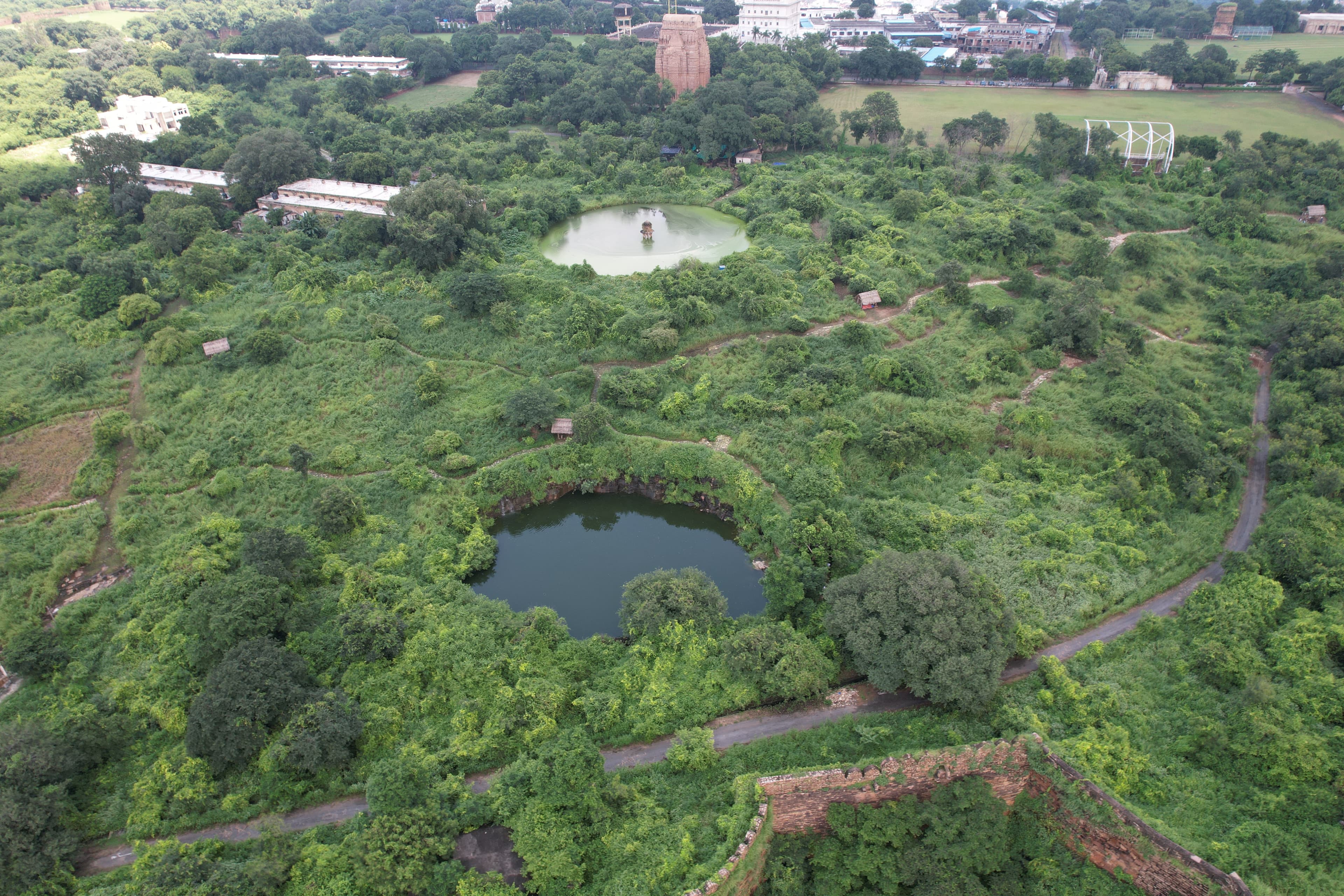
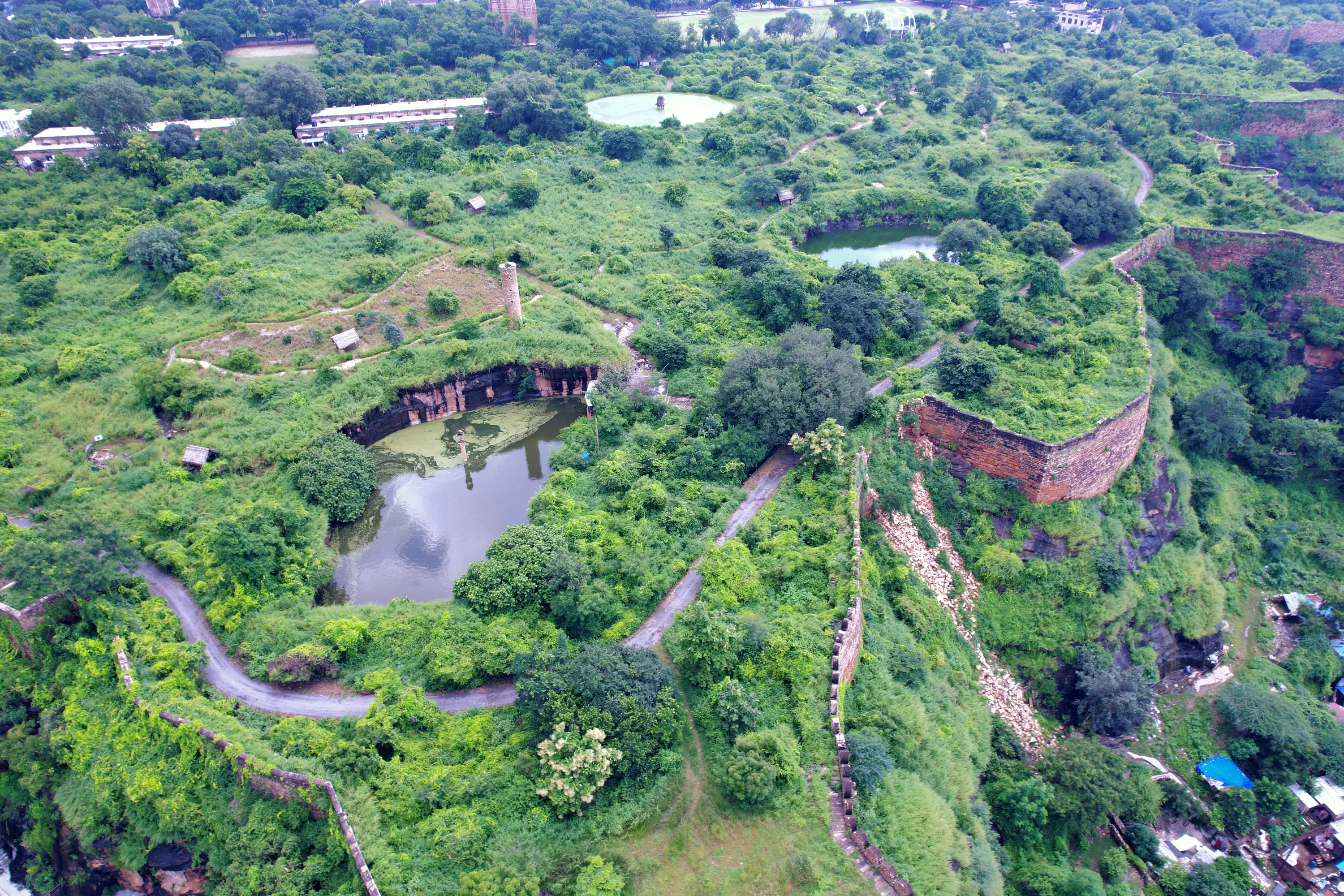
Perched atop the historic ramparts of The Scindia School in Gwalior, the Fort Biosphere is not a landscaped garden or a symbolic green initiative—it is a functioning ecological system shaped by observation, research, and sustained student involvement.
Launched in 2020, the Fort Biosphere began as a focused effort to restore ecological balance within the fort campus. Early surveys revealed a landscape under stress: invasive plant species had spread aggressively, soil fertility was declining, and existing water bodies were underutilized. Rather than introducing decorative plantations or artificial landscaping, the project adopted a restoration-based approach rooted in ecological science. The guiding principle was simple: repair natural systems instead of redesigning them.
What began as a two-pillar initiative centered on rewilding and water conservation has since evolved into a five-pillar sustainability framework. These pillars: Rewilding, Water Conservation, Waste Transformation, Energy Conservation, and Regenerative Farming; operate as interconnected systems rather than isolated projects.
Rewilding formed the foundation. Invasive species such as Parthenium, Lantana, and Subabool were systematically removed because of their harmful impact on biodiversity and soil health. In their place, native species suited to the local climate and geology were introduced. To ensure a reliable supply of indigenous plants, the school established its own Native Plant Nursery, which now maintains thousands of saplings with high survival rates. These plants are used both within campus restoration zones and distributed to other institutions, extending ecological impact beyond the fort walls.
One of the most visible outcomes of this effort is the wildflower meadow, developed across a previously barren stretch of land. Now home to dozens of native grass and plant species, it functions as a carbon sink, a pollinator habitat, and a field classroom where students observe ecological succession firsthand—from bare rock surfaces to soil formation and vegetation growth.
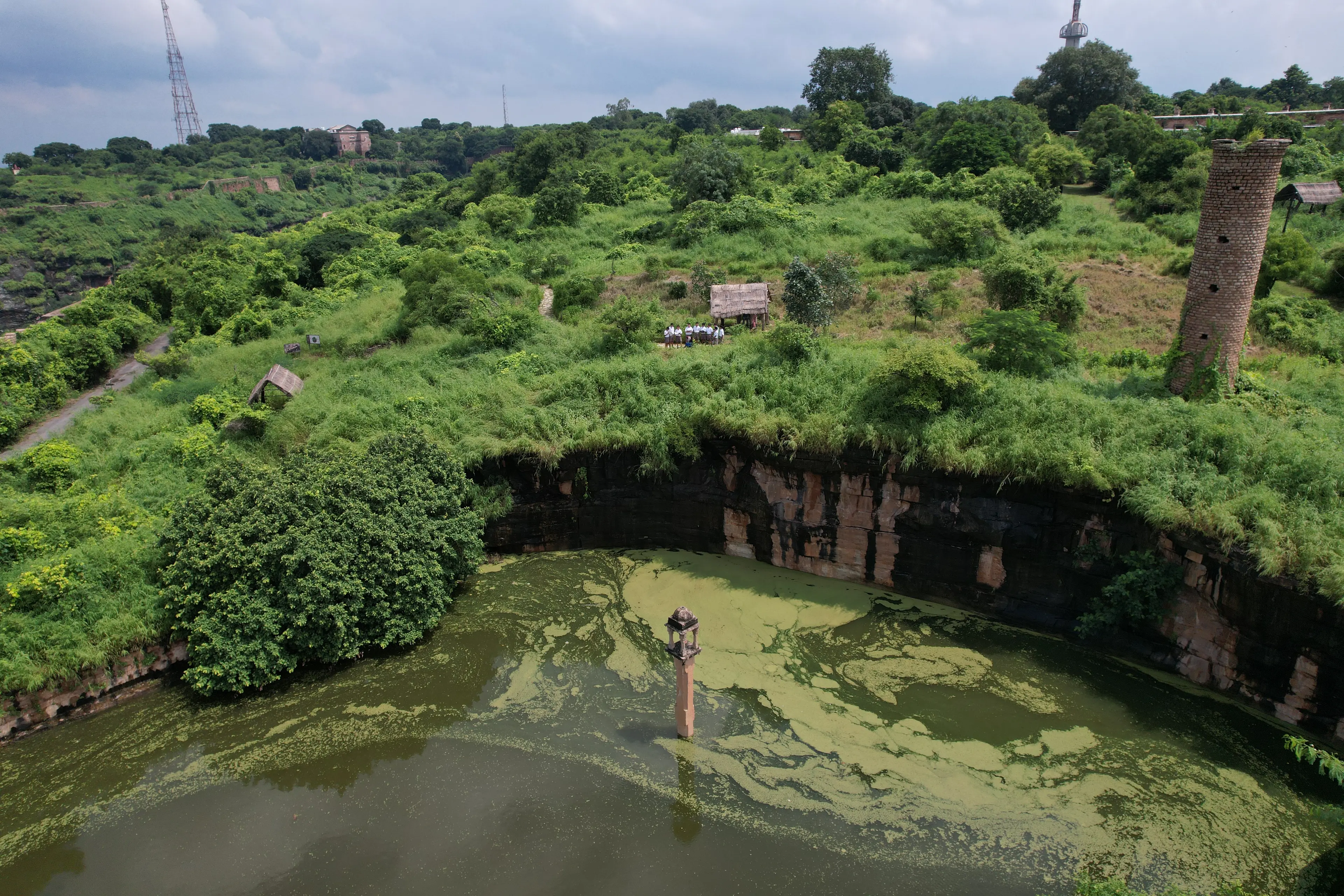
Fort Biosphere isn’t a display garden. It’s an ecosystem, a classroom, a research site, and a training ground — folded into how the school actually runs.